BPC-157 and Tissue Repair: What the Preclinical Research Says
Among peptides currently attracting significant attention in preclinical research, the peptide BPC-157 has emerged as one of the most widely studied compounds in regenerative biology. Unlike most compounds studied in this space, which tend to target a single tissue type or pathway, BPC-157 has been examined across musculoskeletal, gastrointestinal, cardiovascular, and neurological models — often with notable and reproducible findings in each.
This article provides a comprehensive overview of the current state of preclinical research on BPC-157, covering its proposed mechanisms, tissue repair applications, pharmacokinetics, administration methods, and some of the genuine challenges that make this peptide difficult to study rigorously.
What Is BPC-157?
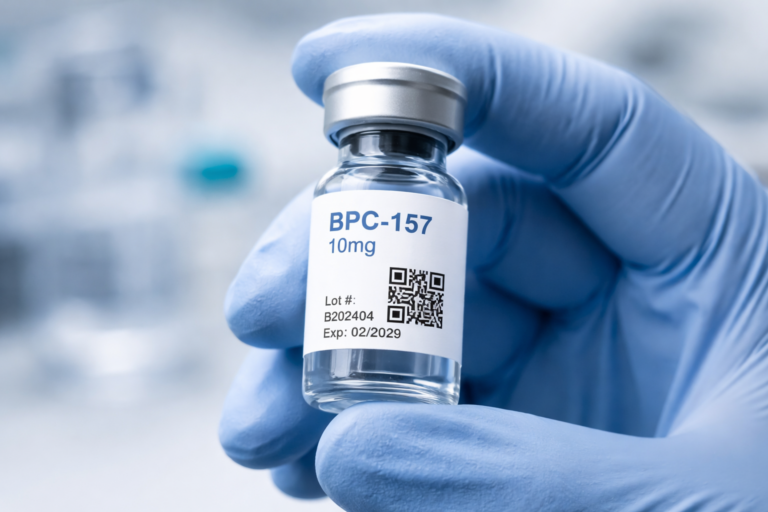
BPC-157, or Body Protection Compound-157, is a synthetic pentadecapeptide composed of 15 amino acids, with the sequence Gly-Glu-Pro-Pro-Pro-Gly-Lys-Pro-Ala-Asp-Asp-Ala-Gly-Leu-Val. Its molecular weight is approximately 1,419.5 Da and its CAS number is 137525-51-0.
It was first isolated from human gastric juice, where the parent protein is thought to play a cytoprotective role in the gastrointestinal lining. The synthetic version, BPC-157, retains the biologically active sequence and has been the subject of hundreds of peer-reviewed preclinical studies spanning more than three decades.
One of its most notable biochemical properties is its stability in gastric acid — an unusual characteristic among peptides, which typically degrade rapidly in the digestive environment. This stability has made it particularly interesting in gastrointestinal research and has raised the possibility of oral administration routes that would be impractical for most peptides.
Proposed Mechanisms of Action
Research suggests BPC-157 interacts with several biological systems simultaneously, which may account for its broad activity profile across tissue types.
VEGF Signalling: Studies have proposed that BPC-157 upregulates vascular endothelial growth factor (VEGF) and its receptors, promoting angiogenesis — the formation of new blood vessels — in injured tissue. Adequate vascularisation is essential for tissue repair, as it restores oxygen and nutrient delivery to the wound site.
Nitric Oxide (NO) Pathways: BPC-157 has been shown in multiple studies to influence nitric oxide synthesis, which plays a critical role in vasodilation, inflammation regulation, and cellular signalling during repair processes. This interaction is thought to be central to its cardiovascular and gastrointestinal effects.
Growth Factor Modulation: Research has pointed to interactions with epidermal growth factor (EGF), fibroblast growth factor (FGF), and transforming growth factor-beta (TGF-beta) — all of which are central to fibroblast activity, collagen deposition, and wound closure.
Extracellular Matrix Remodelling: BPC-157 appears to influence the activity of matrix metalloproteinases (MMPs) and their tissue inhibitors (TIMPs), enzymes responsible for breaking down and remodelling the extracellular matrix during tissue repair.
Serotonergic and Dopaminergic Modulation: Research has also identified interactions with serotonin and dopamine pathways, which may underlie some of the neurological and gastrointestinal findings observed in preclinical models.
Musculoskeletal Research
Musculoskeletal Research
Tendon and ligament injuries are notoriously slow to heal due to limited vascularity and the complex mechanical demands placed on connective tissue. BPC-157 has been studied extensively in this context, with a particularly consistent body of evidence emerging from rodent models.
In rat models of Achilles tendon transection, BPC-157 administration has been associated with accelerated tendon-to-bone healing, improved collagen organisation, and increased tensile strength compared to controls. Studies have observed enhanced fibroblast migration and proliferation at injury sites — processes fundamental to connective tissue repair — alongside upregulation of VEGF and FGF2, supporting the proposed angiogenic mechanism.
Bone healing models have shown similar findings. Research in rodent fracture models has demonstrated increased callus formation and osteoblast activity following BPC-157 administration, suggesting a role in supporting the early stages of bone repair and mineralisation.
Muscle injury models, including crush injuries and surgical trauma, have shown reduced inflammatory infiltration and faster functional recovery in BPC-157 treated groups. Satellite cell activation — a key step in skeletal muscle regeneration — has also been a focus of investigation in some studies.
Gastrointestinal Research
The gastrointestinal tract is arguably where BPC-157 research is most mature and most consistently replicated. Given its origins as a gastric protein-derived peptide, this is perhaps expected.
Preclinical studies have investigated BPC-157 in models of gastric ulceration, including NSAID-induced ulcers, stress ulcers, ethanol-induced lesions, and surgical fistulae. Across these varied models, BPC-157 administration — whether systemic or oral — has consistently been associated with reduced ulcer area, accelerated mucosal healing, and restoration of gastric blood flow.
In intestinal research, BPC-157 has shown effects on tight junction proteins including occludin and ZO-1, which are critical to intestinal barrier integrity. Studies in models of experimental colitis and intestinal fistulae have demonstrated reduced inflammatory markers and improved mucosal architecture following treatment.
The cytoprotective effects observed in gastrointestinal research appear to involve both local and systemic mechanisms, with nitric oxide pathways and serotonin modulation both implicated in the current literature.
Stay ahead of peptide research
Get research updates, new compound releases, and exclusive insights delivered to your inbox.
No spam. Research subscribers only. Unsubscribe anytime.
What is Neurological Research relating to BPC-157
More recently, research has expanded into neurological applications. Studies in rodent models of traumatic brain injury, spinal cord trauma, and peripheral nerve injury have investigated BPC-157’s potential neuroprotective and neuroregenerative properties.
Findings have included reduced glutamate excitotoxicity, preservation of dopaminergic neurons in Parkinson’s disease models, and improved functional recovery following peripheral nerve crush injuries. Axonal regrowth and remyelination have been observed in some spinal cord models, suggesting potential relevance to demyelinating conditions.
The mechanisms proposed here overlap with those seen in other tissue types — angiogenesis, inflammation modulation, and growth factor signalling — reinforcing the view that BPC-157’s effects may be systemic rather than tissue-specific.
What is the Cardiovascular Research and BPC-157?
Emerging research has examined BPC-157 in cardiovascular contexts. Animal models of heart failure and cardiac arrhythmia have shown potential cardioprotective effects, including reduced infarct size, preserved cardiac function following ischaemic insult, and normalisation of blood pressure in hypertension models. BPC-157’s influence on nitric oxide pathways and VEGF-mediated angiogenesis is thought to be particularly relevant here.
Pharmacokinetics Research
Understanding how BPC-157 behaves in biological systems — how it is absorbed, distributed, and degraded — is essential for interpreting the preclinical data and designing meaningful research protocols.
Absorption: BPC-157 has demonstrated unusual stability in the gastrointestinal environment, resisting degradation by gastric acid and proteolytic enzymes that typically cleave peptide bonds. This property has enabled effective oral administration in rodent models — a route that is generally impractical for peptides of this size. The precise mechanisms of gastrointestinal absorption remain an active area of investigation.
Stability: In lyophilised (freeze-dried) form, BPC-157 demonstrates good long-term stability when stored appropriately. Studies examining peptide integrity over time have confirmed that the lyophilised compound retains structural integrity under cold storage conditions. Once reconstituted in aqueous solution, stability is reduced, and refrigerated storage with limited light exposure is recommended.
Peptide Degradation: Like all peptides, BPC-157 is subject to enzymatic degradation in biological fluids. However, its proline-rich sequence — prolines are particularly resistant to proteolytic cleavage — is thought to contribute to its relative stability. The full metabolic fate of BPC-157 in vivo remains an important gap in the literature.
Half-Life: Precise half-life data for BPC-157 across various administration routes is limited in the published literature. This gap makes dose optimisation across models more complex and highlights the need for dedicated pharmacokinetic studies.
Administration Methods in Research
BPC-157 has been studied using several different administration routes in preclinical models, each with distinct implications for bioavailability, onset of action, and practical applicability.
Oral Administration: Perhaps the most unusual aspect of BPC-157 research is the consistent efficacy observed via the oral route. Oral dosing in rodent models — typically via gavage or drinking water — has produced systemic effects despite the peptide passing through the gastrointestinal tract. This is contrary to what would be expected for most peptides and has driven significant research interest.
Intraperitoneal (IP) Administration: The most commonly used systemic route in rodent models, intraperitoneal injection allows for relatively rapid absorption into systemic circulation and consistent bioavailability. Many musculoskeletal and neurological studies in the literature use IP administration, typically at doses ranging from 10 to 200 mcg/kg in rodent models.
Subcutaneous (SC) Administration: Subcutaneous injection has also been used in preclinical research, particularly in models where sustained release profiles are of interest. Absorption via this route is generally slower than IP, which may influence the timing of observed effects.
Local Administration: Some wound healing and tendon repair studies have investigated localised delivery of BPC-157 directly to the injury site, aiming to maximise local concentration at the target tissue while minimising systemic exposure.
Dosing Ranges in Rodent Models: Across the preclinical literature, doses in rodent models have typically ranged from 1 to 10 mcg/kg at the lower end up to 100 to 200 mcg/kg for musculoskeletal and systemic applications. Direct translation of these parameters to other species or contexts is not supported by the current evidence base.
Why BPC-157 Is Difficult to Study?
Despite its promising preclinical profile, BPC-157 presents genuine challenges as a subject of scientific investigation. Understanding these challenges is important for critically evaluating the existing literature and designing robust future research.
Peptide Stability and Synthesis Purity: The quality of BPC-157 used in research has significant implications for experimental outcomes. Impurities arising from incomplete synthesis, improper storage, or contamination can confound results and reduce reproducibility. Researchers working with BPC-157 should ensure they are using verified, high-purity material with documented analytical testing — including HPLC purity analysis and mass spectrometry confirmation — to ensure experimental reproducibility. Endotoxin testing is also important, as bacterial contamination can independently produce inflammatory responses that obscure the compound’s true biological effects.
Replication Challenges: A notable proportion of the most-cited BPC-157 research originates from a relatively small number of research groups. While this does not invalidate the findings, it does underscore the importance of independent replication across diverse laboratories using standardised protocols. The field would benefit significantly from broader multi-centre studies.
Absence of Clinical Trial Data: With the exception of a small number of early-phase human trials in gastrointestinal conditions, BPC-157 has not progressed through formal clinical development. The absence of human pharmacokinetic data and placebo-controlled trials makes it impossible to draw conclusions about translational applicability from the preclinical literature alone.
Mechanism Complexity: BPC-157 appears to act through multiple overlapping pathways simultaneously, which makes it difficult to attribute observed effects to specific mechanisms. This complexity, while scientifically interesting, complicates the design of mechanistic studies and makes dose-response relationships harder to establish definitively.
Conclusion
BPC-157 remains one of the most compelling peptides in current preclinical research. Its unusually broad activity profile across tissue types, combined with a well-characterised safety profile in animal models and over three decades of published research, makes it a significant subject of interest for researchers working across regenerative biology, gastroenterology, neuroscience, and cardiovascular science.
The challenges outlined above — replication gaps, synthesis quality concerns, and the absence of clinical data — do not diminish the scientific interest in BPC-157, but they do highlight the importance of rigorous, well-controlled research using verified materials. As the field matures and clinical research begins to explore translational potential, BPC-157 is likely to remain at the forefront of peptide science for years to come.
Selected Preclinical References
Sikiric P, et al. (2010). Stable gastric pentadecapeptide BPC 157 in trials for inflammatory bowel disease. Journal of Physiology — Paris, 103(3-5), 78-88.
Chang CH, et al. (2011). The promoting effect of pentadecapeptide BPC 157 on tendon healing involves tendon outgrowth, cell survival, and cell migration. Journal of Applied Physiology, 110(3), 774-780.
Hsieh MJ, et al. (2017). Therapeutic potential of pro-angiogenic BPC157 is associated with VEGFR2 activation and up-regulation. Journal of Molecular Medicine, 95(3), 323-333.
Seiwerth S, et al. (2014). BPC 157’s effect on healing. Journal of Physiology — Paris, 108(2-3), 93-96.
Tvrdeic A, et al. (2018). BPC 157 and the central nervous system. Current Neuropharmacology, 16(10), 1444-1456.
Vukojevic J, et al. (2018). Rat inferior caval vein ligature and particular new insights with the stable gastric pentadecapeptide BPC 157. Vascular Pharmacology, 106, 54-66.
Full citations available on PubMed. Search term: BPC-157 OR BPC157 OR body protection compound.
This article is intended for informational purposes relating to scientific research only. BPC-157 is not approved for human or veterinary use. All research must be conducted in compliance with applicable laws and regulations.
Varalion supplies research-grade BPC-157 for laboratory use.